When people search for a food photographer in India, they usually judge by the final image: does the food look like something they want to eat? Most of what makes that happen is light. Styling matters, the recipe matters, the plate matters, but the same dish can look fresh or tired depending on where the light comes from and how soft it is.
This is how I think about lighting food on brand shoots. It is not a formula. It is the set of decisions I make on almost every food set.
Start with one main light, and make it soft
Most food looks best under one large, soft light source, placed to the side or slightly behind the dish. A large diffused light wraps gently around the food, keeps highlights smooth and keeps shadows open enough to see detail.
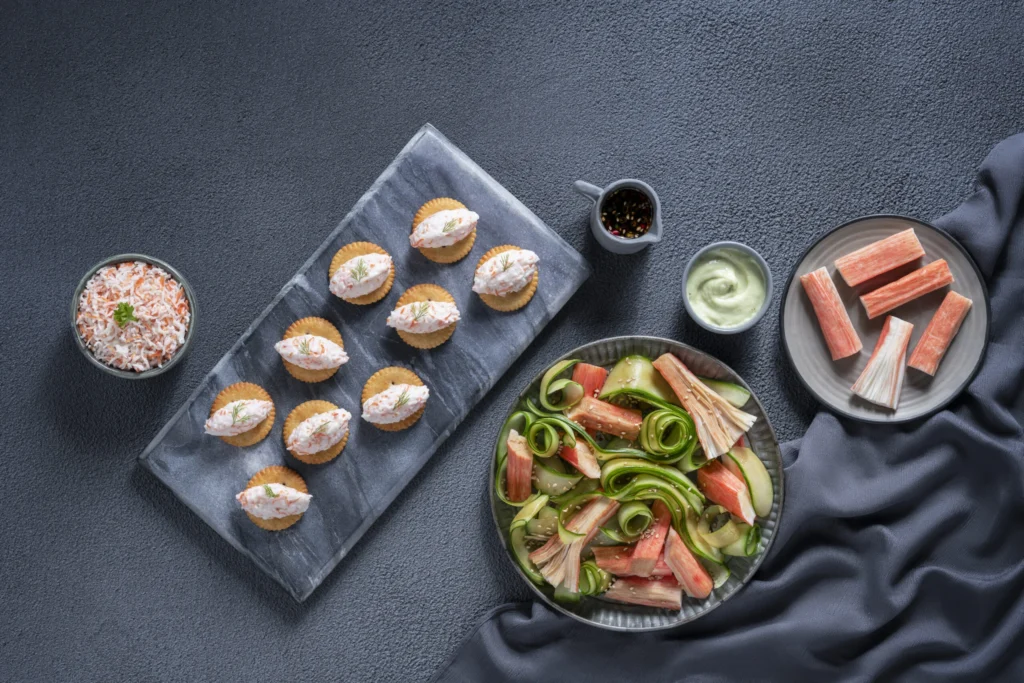
For Amar Foods, shot over four days in Porbandar, Gujarat, the brief was a warm, home-cooked feel with a refined finish. We chose rustic wooden surfaces and soft, diffused lighting for exactly that reason. Hard light would have made the same dishes look more like a restaurant menu than a home kitchen.
Use backlight for texture
Texture is what tells the viewer that food is crisp, juicy or freshly cooked. A light from behind or behind-and-to-the-side picks up edges, crumbs, steam and gloss.
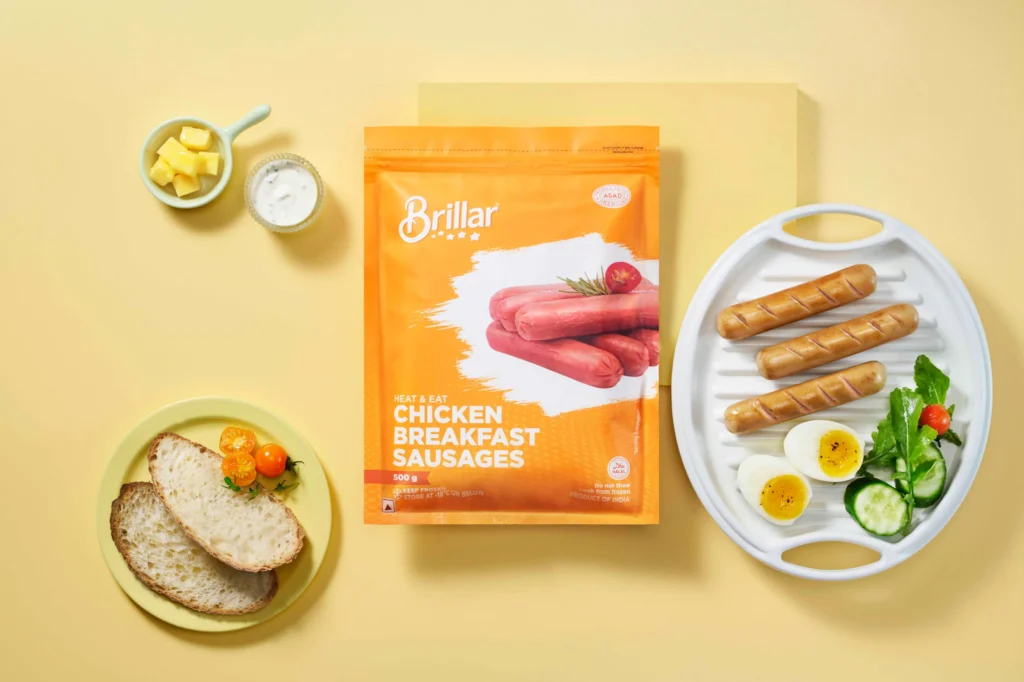
On the Brillar shoot for vehicle branding we used controlled studio lighting with soft diffused light for a natural feel, and a narrow backlight to bring out crispness, the golden edge on a fried cutlet. Without that backlight, fried food can look flat and heavy.
Control the shadows instead of removing them
Shadows give food shape. If every shadow is filled, a plate of food starts to look like a cut-out. I use white boards to open shadows a little and black boards to deepen them where I want depth. The aim is to keep shadows balanced, so that dark gravies still show detail and the frame still has form.
Dark backgrounds need more care, not less
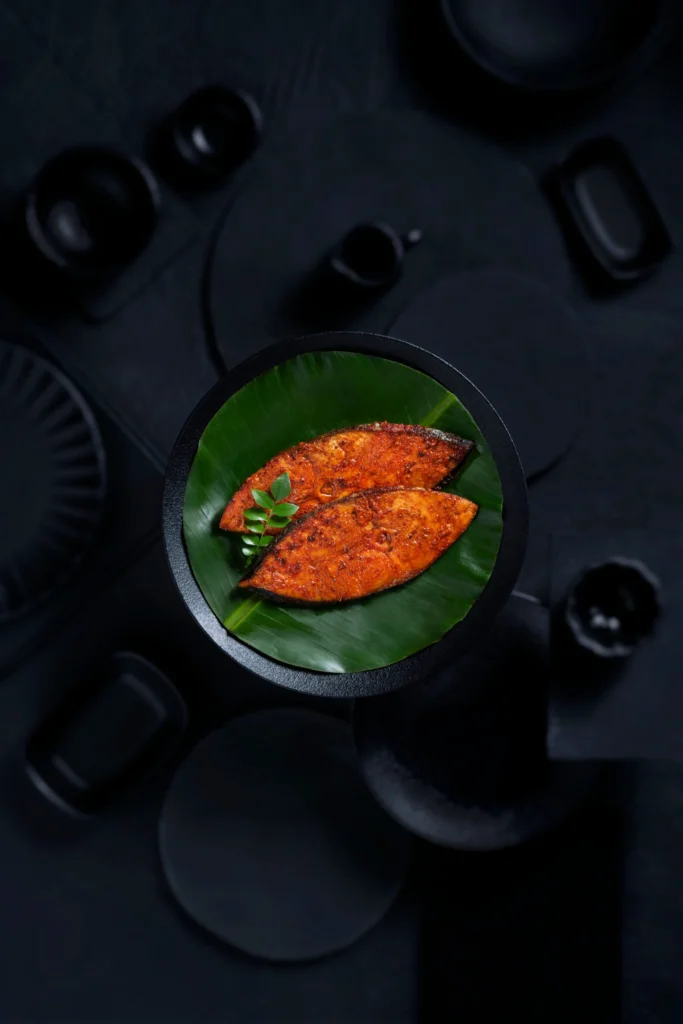
Dark, moody backgrounds are popular, and they suit fried food, grilled dishes and rich gravies. They also hide mistakes less than people think. On a dark set I keep the light narrow and directional, so that it falls on the food and not the background, and I watch the browns closely so that they do not go muddy. On Brillar I paid close attention to contrast so that browns stayed rich and greens stayed lively.
Hard light has a place
Hard light gives crisp shadows and strong colour. It is less common in food, but it works for bright, graphic frames, drinks and packaged products, and for brands whose identity is bold rather than homely. I used hard light on clean pastel backgrounds for the Carbon BAE skincare products. The same thinking can apply to snack and beverage brands that want energy rather than warmth.
Match the angle to the dish, then light for that angle
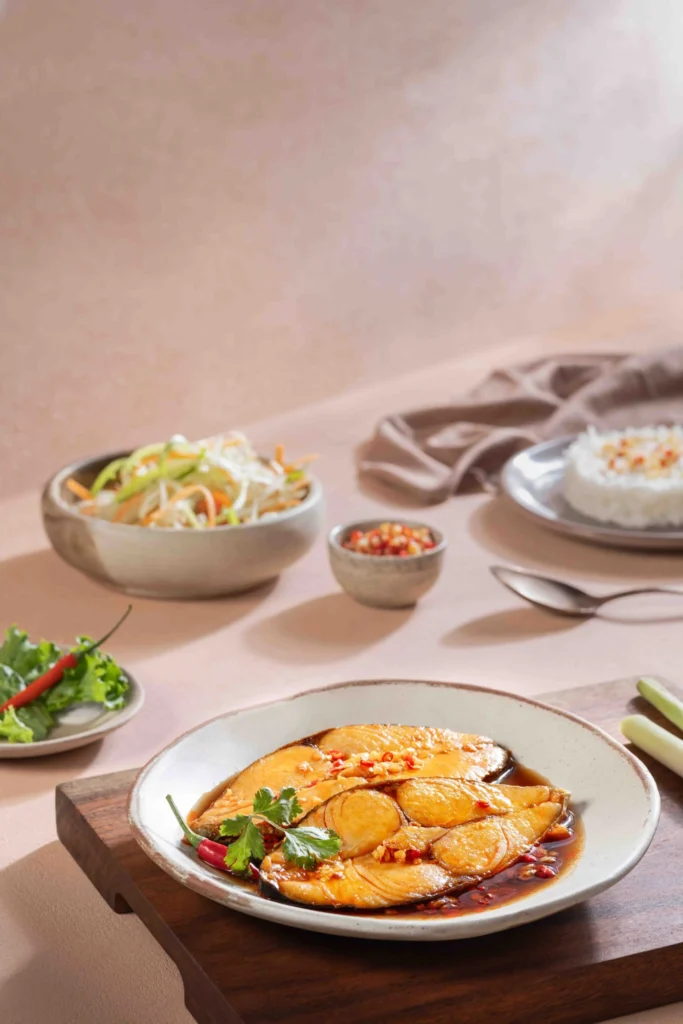
Lighting and camera angle are decided together. For Brillar’s ready-to-fry items we shot slightly top-down to show texture. For gravies and cooked dishes we used a 45-degree angle, close to what a diner sees at the table. A top-down frame needs light that skims across the surface. A 45-degree frame often needs light from behind to lift the front edge of the food.
Keep the colour honest
Food colour has to be believable. Whites should be neutral and tones warm without turning orange. On Brillar, post-production by BSR focused on realism, with neutral whites and warm tones, and the files were profiled for CMYK vinyl printing because they were going on delivery vehicles. Mixed light sources on set, such as a window plus a warm lamp, make this harder, so I usually keep the set to one colour of light.
Shoot tethered
I prefer to shoot tethered, straight to a monitor, on food sets. Everyone on set, including the food stylist and the client, can see the frame large and judge colour, composition and print safety in real time. It is much easier to move a light by a few centimetres than to fix it later.
Light works with the stylist
Food lighting is a collaboration. On Brillar, food stylist Anupama brushed oil for gloss and layered garnish for dimension, and the backlight was placed to catch exactly those details. When the stylist and the photographer plan together, the light has something worth showing.
You can see more of my food work on the food and product photography page, in the Brillar case study and in the Amar Foods behind-the-scenes post. If you are planning a food shoot, write to me at mail@naseefgafoor.com or call +91 99955 50062.