Rooms are what guests pay for, and room photographs are what they compare most closely before they book. A lobby can impress and a pool can sell a mood, but the guest room image is the one people zoom into on a booking site. It has to be attractive and it has to be honest.
My earlier checklist for the property team covers what the hotel should prepare before a shoot. This post is about the other side: what I do with the camera once the room is ready.
Start with the light, not the furniture
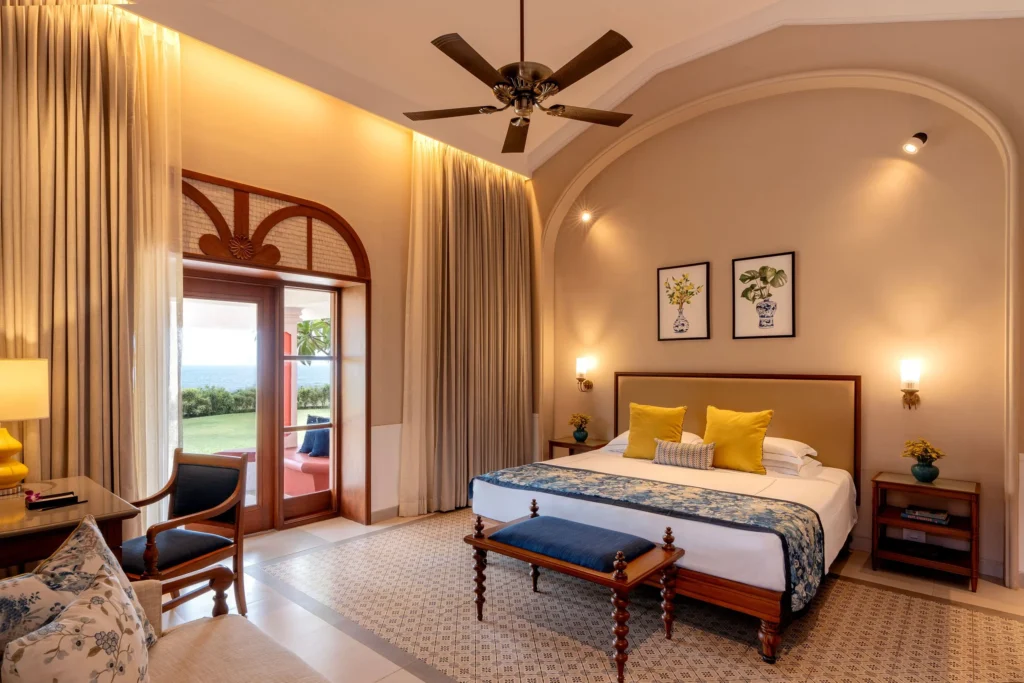
Before I place the camera, I look at where the window is and how the light moves across the room during the day. At TAJ Holiday Village in Goa we made a light map for the whole property during the recce, noting the best time for each scene. Rooms were scheduled around it. Morning light coming in through open wooden shutters gave a warm edge that became the anchor of several frames.
A room photographed at the wrong hour can look flat, or worse, the view outside can burn out to white. A room photographed at the right hour often needs very little added light.
Camera height and straight verticals
Most room photographs look better from a lower camera height than standing eye level, roughly at the height of a counter or the top of the bed. It shows the furniture in proportion and keeps the ceiling from dominating.
Verticals must be straight. Walls, door frames and curtains that lean inwards make a room look smaller and the photograph look careless. On the TAJ shoots I worked primarily with full-frame cameras and tilt-shift lenses for architectural precision, so lines are corrected in camera rather than stretched later.
Choose the corner that tells the truth
The widest angle is not always the best angle. A very wide lens can make a room look bigger than it is, and guests notice when they arrive. I usually look for the corner that shows the bed, the window and one more feature, such as a seating area or a desk, without distorting the space. Then I add one or two tighter frames that show the room the way a guest experiences it, from the door or from the bed.
Balancing the window and the view
The hardest part of most room photographs is the window. The room is darker than the view outside, and the view is often the reason the room costs more. I shoot each scene with a range of exposures so that the interior and the exterior both hold detail, and then blend them carefully. On the TAJ shoots every scene was captured in high dynamic range to handle the transitions between interior and exterior light. The aim is a view that looks like what a guest sees, not a painted sky.
Lights on, or off?
Room lamps add warmth and show the guest that the fittings exist. Too many lamps mixed with daylight can give patchy colour. I usually switch on only the lamps that add something to the frame, and correct colour so that tungsten and daylight sit together naturally. Colour calibration on location helps keep the property’s tones consistent between rooms shot on different days.
Styling: lived-in, not staged
The TAJ brief for Holiday Village was to make spaces feel lived-in, not staged. In rooms that meant small human traces: a half-open door, cushions slightly unaligned, sunlight catching a water glass. Props were minimal, only what a guest would actually find there. Fresh flowers, folded linen and a tidy bedside are enough. A room crowded with props looks like a showroom.
The bathroom is its own photograph
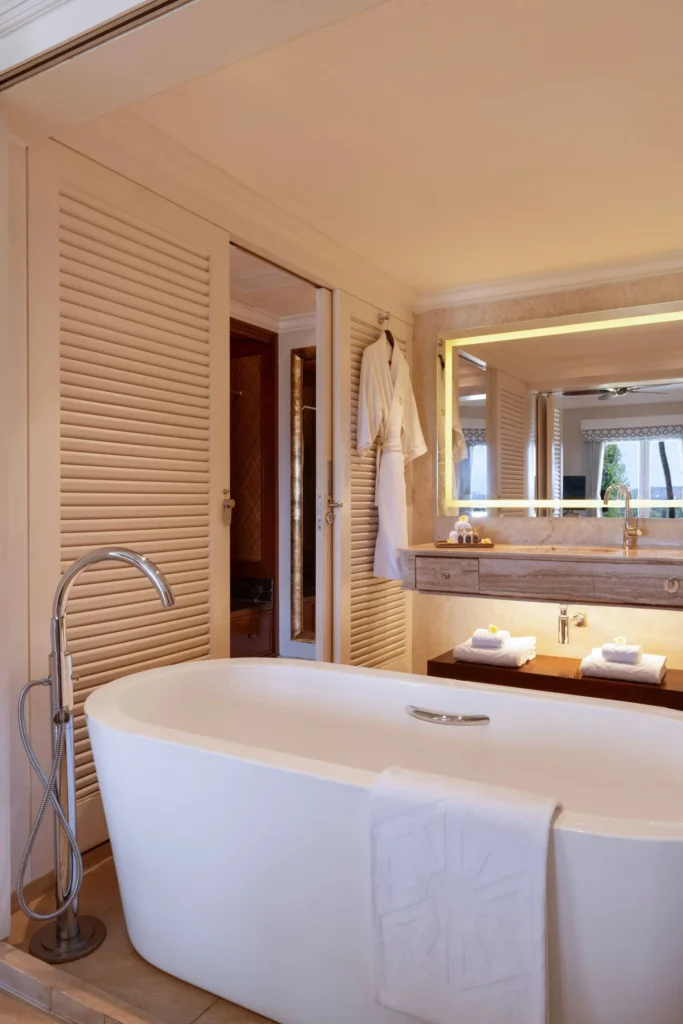
Guests look closely at bathrooms. I photograph them separately, with the same care for verticals and mirrors. Mirrors are the main problem, because they show the camera and the photographer. Choosing the angle so that reflections show the room and not the tripod takes time, and it is worth it.
How many frames does a room need?
For each room category I plan a small set rather than one hero image:
- One wide frame that shows the layout of the room honestly.
- One frame from a second angle, often towards the window or the view.
- The bathroom.
- Two or three details: bedside, seating, a texture or a view from the window.
- Where the brief allows, one frame with a guest or a hint of a guest.
This set works across the hotel website, OTA listings, brochures and social media, and lets guests understand the room before they arrive.
Different rooms, different light
Every category should look like itself. A garden-facing room with French doors needs a different time of day from a sea-facing suite. At Taj Holiday Village the cottages and garden rooms were photographed for warmth and greenery. At Fort Aguada the brief leaned towards elegant interiors that echo old-world charm. Matching each room to its own best light is what keeps a set of room photographs from looking repetitive.
You can see more of my hotel work on the hotel and resort photography page and in the TAJ Holiday Village case study. If you are planning room photographs for your property, write to me at mail@naseefgafoor.com or call +91 99955 50062.