A hotel’s photographs do one job before anything else. They decide whether someone who has never seen the property books a room directly, books it through an OTA, or closes the tab. That is the standard a hospitality photographer should be hired against.
I photograph hotels, resorts and smaller stays across India from my base in Kochi. I have worked with Taj Hotels & Resorts, Shreyas Retreat and Punnamada Resorts, and with boutique properties such as Poothali Paddyview Homestay. Most of the conversations I have with hotel marketing teams start in the same place: they have a budget, a date and a website that is not converting, and they are not sure how to judge one photographer against another.
These are the questions I would ask if I were on the hotel’s side of the table.
Has the photographer worked on a live property?
A hotel shoot is rarely done in an empty building. Guests are checking in, housekeeping is turning rooms, and the restaurant has a service to run. A photographer who has only shot architecture or interiors will plan for a building. A hospitality photographer has to plan for a building that is in use.
When I photographed TAJ Holiday Village Resort & Spa in Goa, we shot live spaces while the resort continued guest operations. That only worked because we coordinated timing with the property’s operations and housekeeping teams before each scene, and because the shot flow had been planned in advance. Ask the photographer how they handle that. If the answer is “we will close the area”, ask how long, and what it will cost you in guest experience.
Do they plan the shoot around the light?
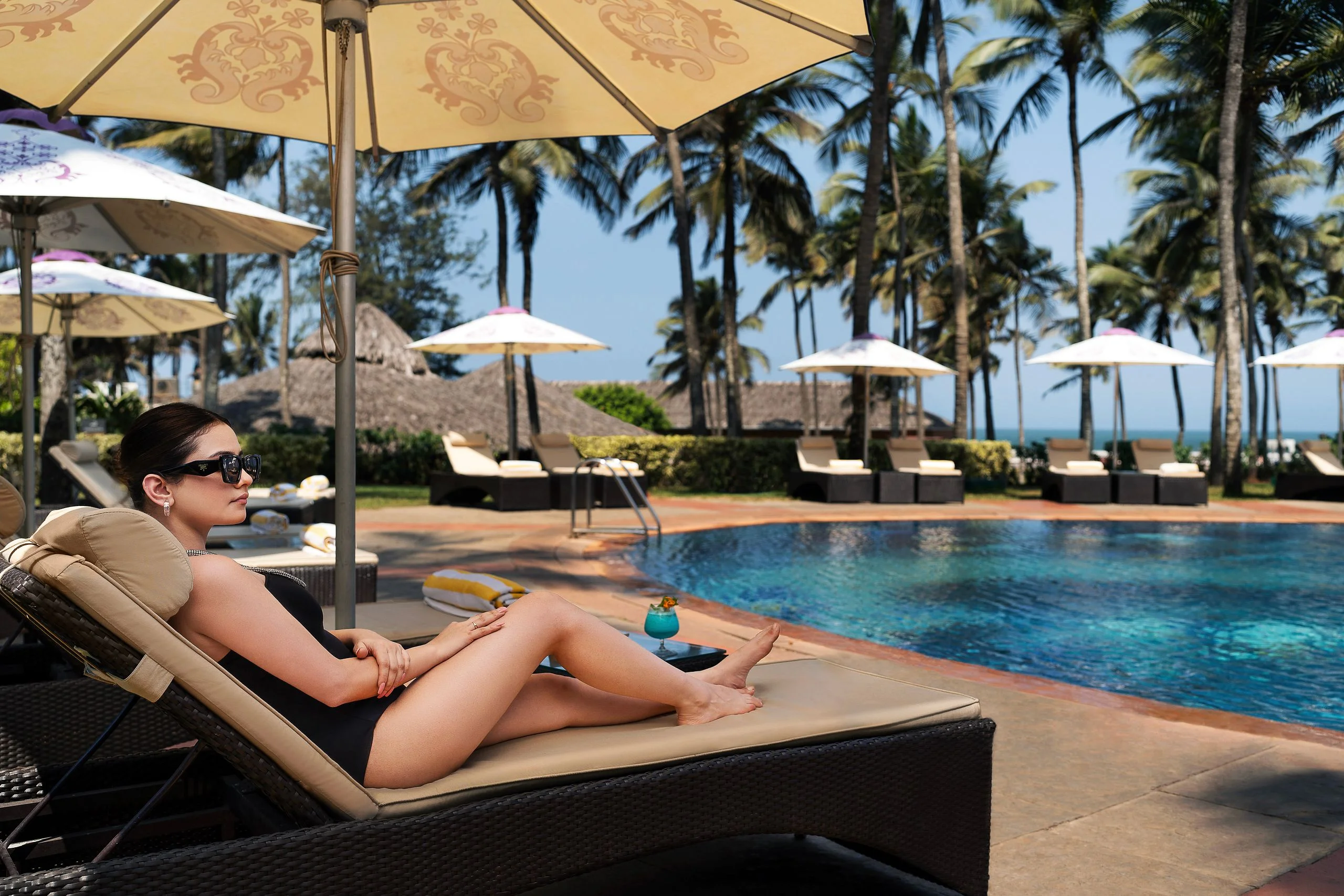
Every property behaves differently through the day. A sea-facing pool, a heritage cottage with wooden shutters and a windowless spa room each have a right time to be photographed, and it is usually not the same time.
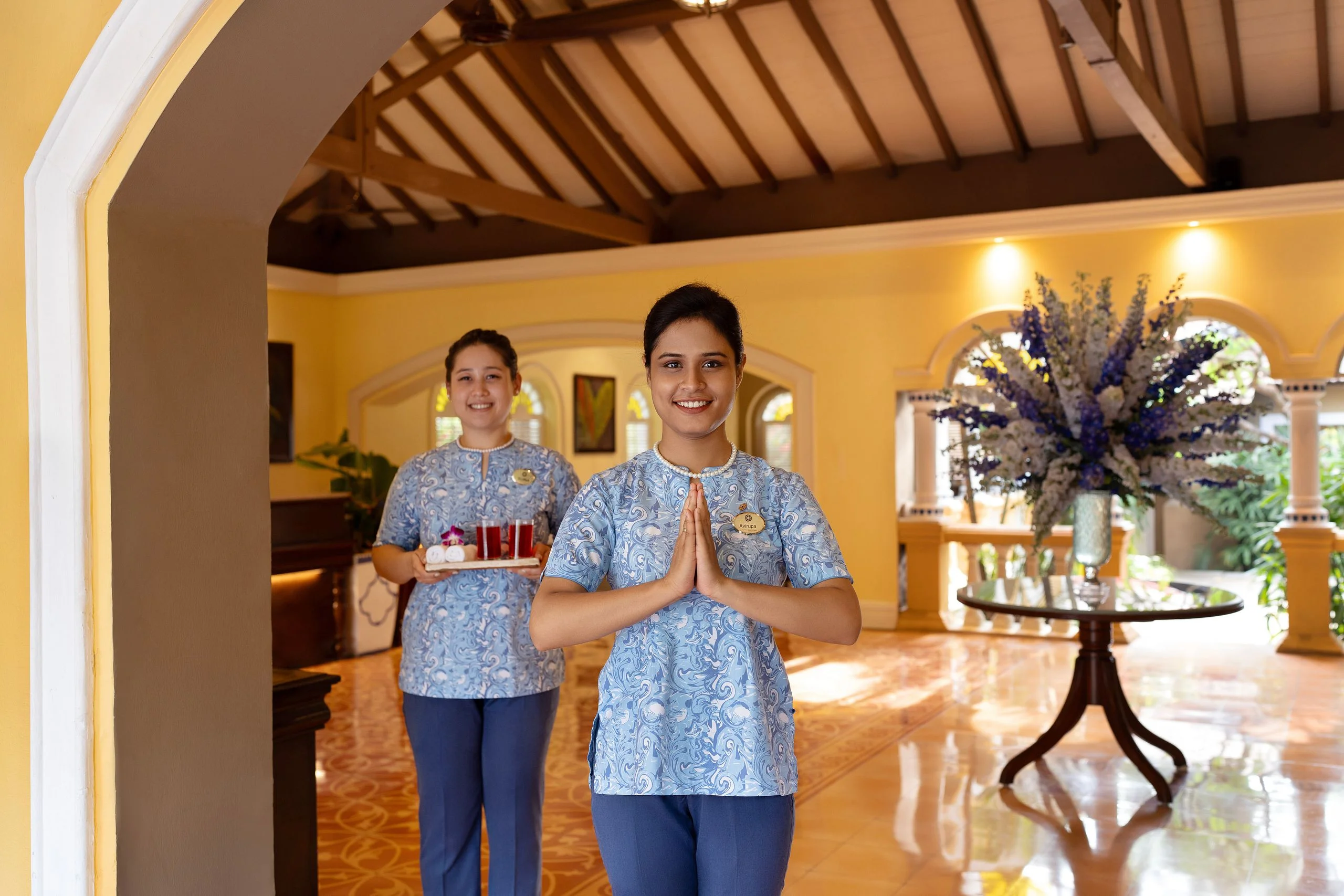
Before I photograph a property, I do a recce and build a light map: a note of the best hour for each space. At TAJ Holiday Village, that light map set the order of the entire shoot so that we could follow the sun and keep artificial light to a minimum. Ask any photographer you are considering how they decide what to shoot at 7am and what to shoot at 5pm. If they do not have an answer, the schedule will be built around convenience rather than the images.
Is there a shot list tied to how the images will be used?
A hotel needs different images for different jobs. The website hero, the room-category pages, the OTA listings, the wedding and MICE brochure and Instagram all ask for different crops, orientations and amounts of empty space for text.
I build a shot matrix before the shoot that covers rooms, food and beverage, spa and guest experiences, and I map each frame to where it will be used. Ask to see a sample shot list from a previous job. It tells you more about how the photographer works than the portfolio does.
How do they handle people in the frame?
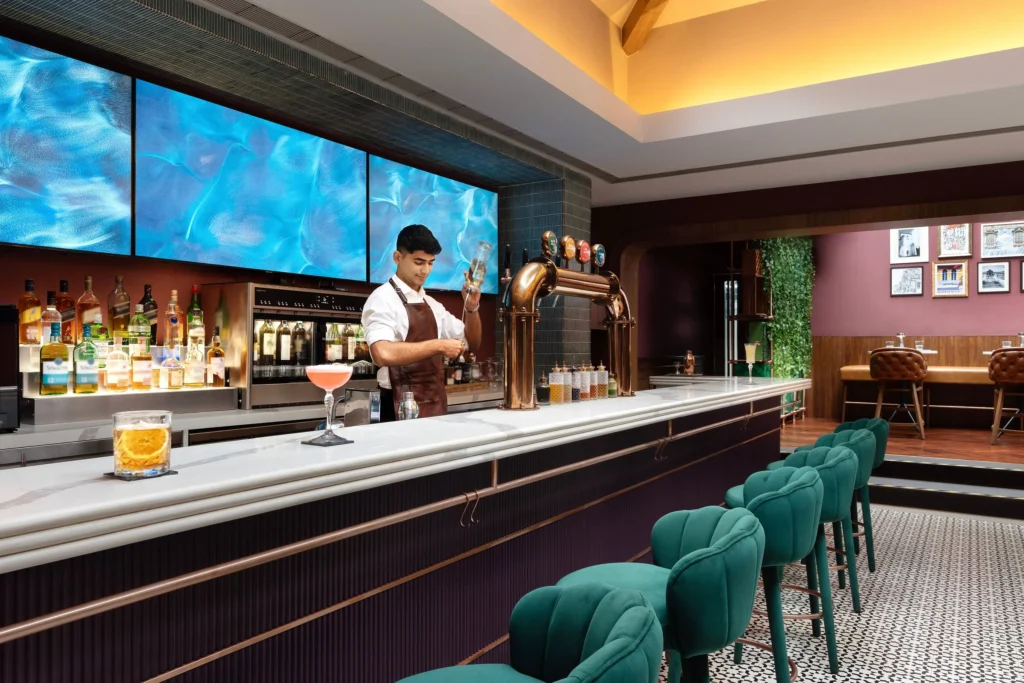
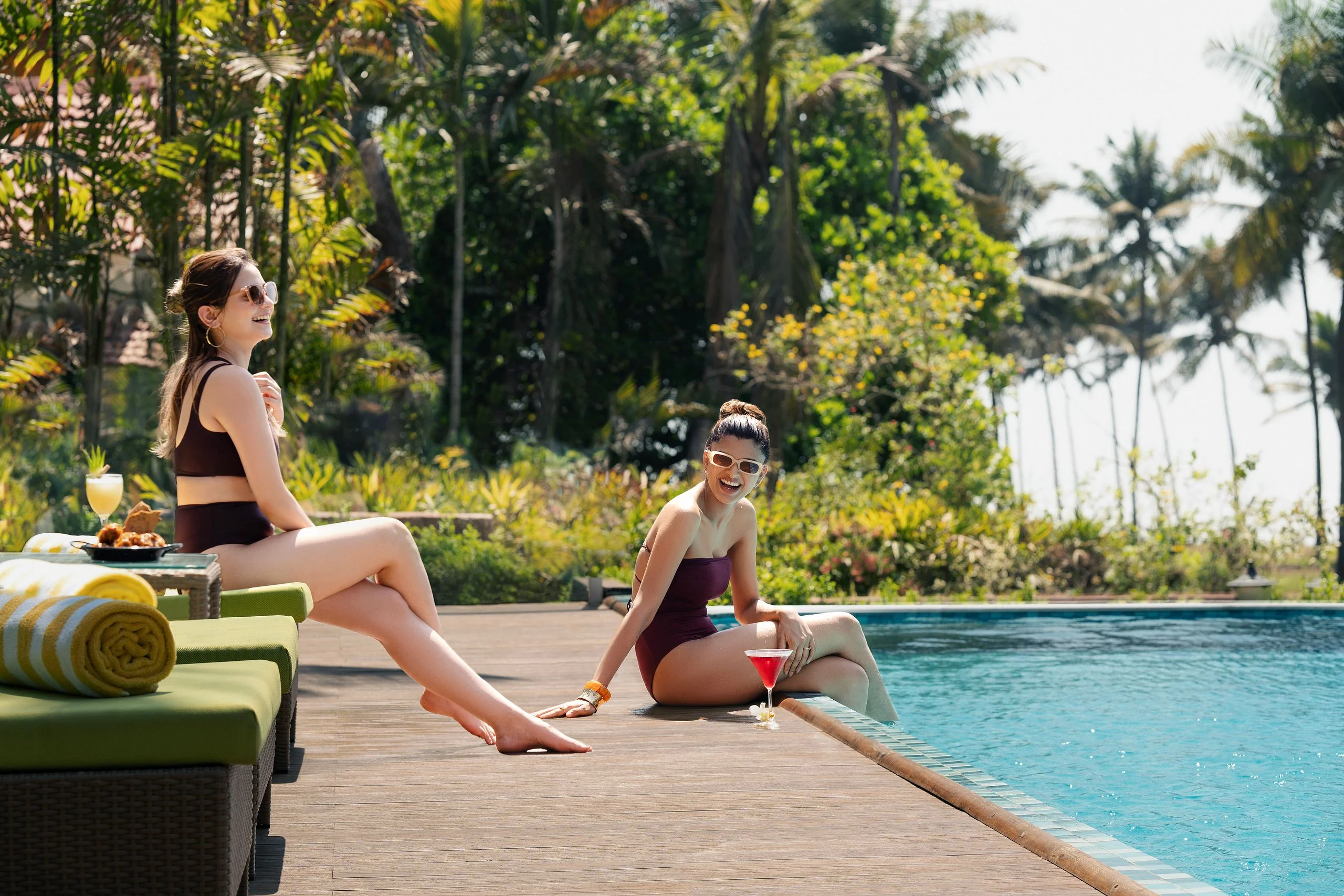
Empty rooms show what a space looks like. A little human presence shows what it is like to stay there. The brief from the TAJ team for Holiday Village was to make the images “feel lived-in, not staged”, and we did that with traces rather than full lifestyle setups: a towel on a sunbed, a drink being poured, a guest walking along the beach.
Feel lived-in, not staged.
The brief from the TAJ team, Holiday Village, Goa
Ask the photographer whether they cast models, use staff, or work with traces only, and who arranges releases. The answer affects your budget and how long you can use the images.
What happens after the shoot?
Post-production is where a hotel’s imagery either stays consistent or falls apart. If the rooms are graded one way and the restaurant another, the website looks like it was shot by three people.
For TAJ Holiday Village, the post-production focus was colour fidelity and keeping the property’s warm tone consistent, not heavy retouching. We corrected perspective for architecture, balanced dynamic range so shadows stayed natural, and removed distractions without smoothing away texture. Ask what the photographer’s retouching covers, how many rounds of revisions are included, and in what formats and sizes the files are delivered.
Who owns what, and for how long?
Hotel images are commercial assets. Agree in writing where you can use them (website, OTAs, print, paid social, press), for how long, and whether third parties such as travel portals or PR agencies may use them too. This is not a formality. It changes the quote.
Can they work with smaller properties as well as large ones?
Not every property is a five-star resort, and not every brief is a website library. For Poothali Paddyview Homestay, a property set among paddy fields, the brief was social-first content. Over four days of production we made reels, lifestyle photographs for ads and the website, and stills for Instagram, all built around natural light and minimal styling. A homestay needs a different plan from a resort with a spa and three restaurants. A good hospitality photographer should be able to tell you how the plan changes with the size of the property.
What to send a photographer when you ask for a quote
You will get a more accurate quote, and a better shoot, if your first message includes:
- the property type and how many room categories, outlets and experiences need to be covered
- where the images will be used, and in what order of priority
- the dates the property can give you, and which areas are hard to close
- any brand guidelines, or images from your group’s other properties that the new set has to match
- whether you need video or social content from the same visit
Where to start
If you are planning a shoot for a hotel or resort anywhere in India, my hotel and resort photography page covers how I work with properties: /hotel-and-resort-photographer/. For examples, see the TAJ Hotels & Resorts case study, the TAJ Holiday Village shoot and the Poothali homestay project.
You can reach me at mail@naseefgafoor.com or +91 99955 50062, or through the contact page.