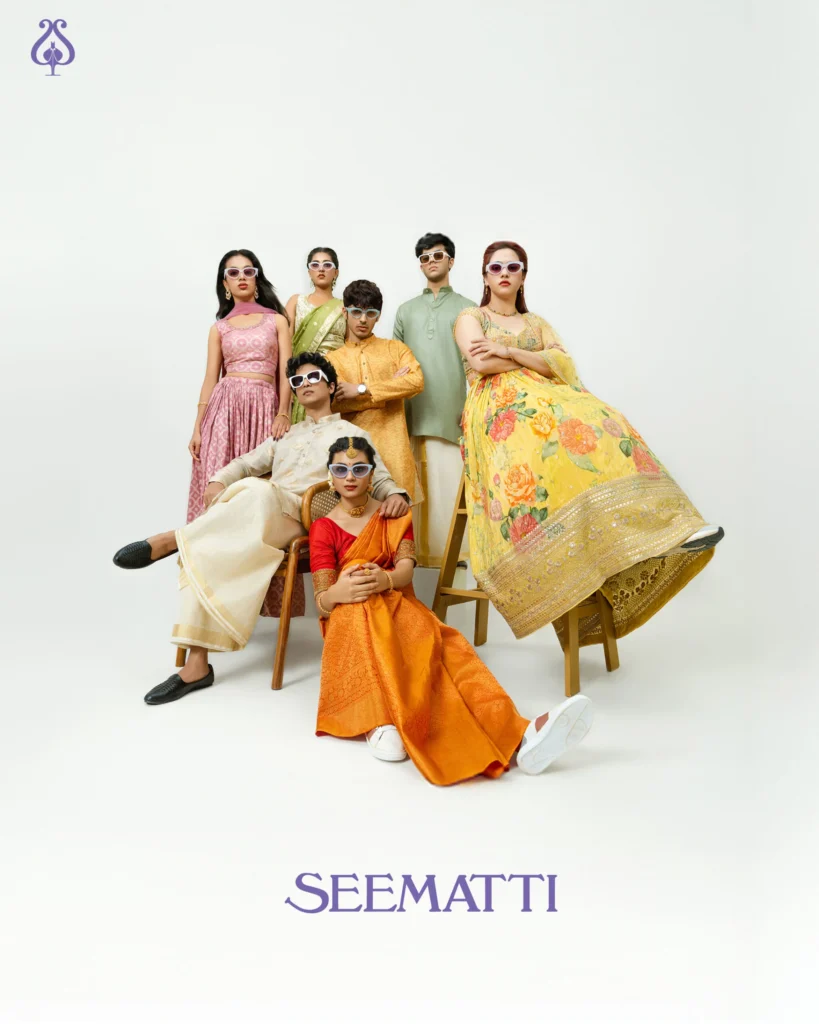
A saree is not a product you can photograph the way you photograph a bottle or a box. It moves, it folds, it catches light differently on the pallu than on the pleats, and the same six yards can look like a wedding or like a Tuesday at the office depending on who wears it and how. That is why ethnic wear campaigns, for textile showrooms and saree brands across India, need a different kind of planning from most product work.
I have photographed sarees, silks, cotton collections and couture for textile brands in Kerala and beyond. This is how I think about an ethnic wear campaign before the shoot day, and what I would want any textile brand to think about too.
Start with what the campaign has to say
Most textile brands come with a collection: festive silks, a cotton line for summer, a bridal edit, a designer label. The collection is the product, but it is not the message. The message is the feeling a customer should walk away with. Heritage, celebration, everyday comfort, youth, family.
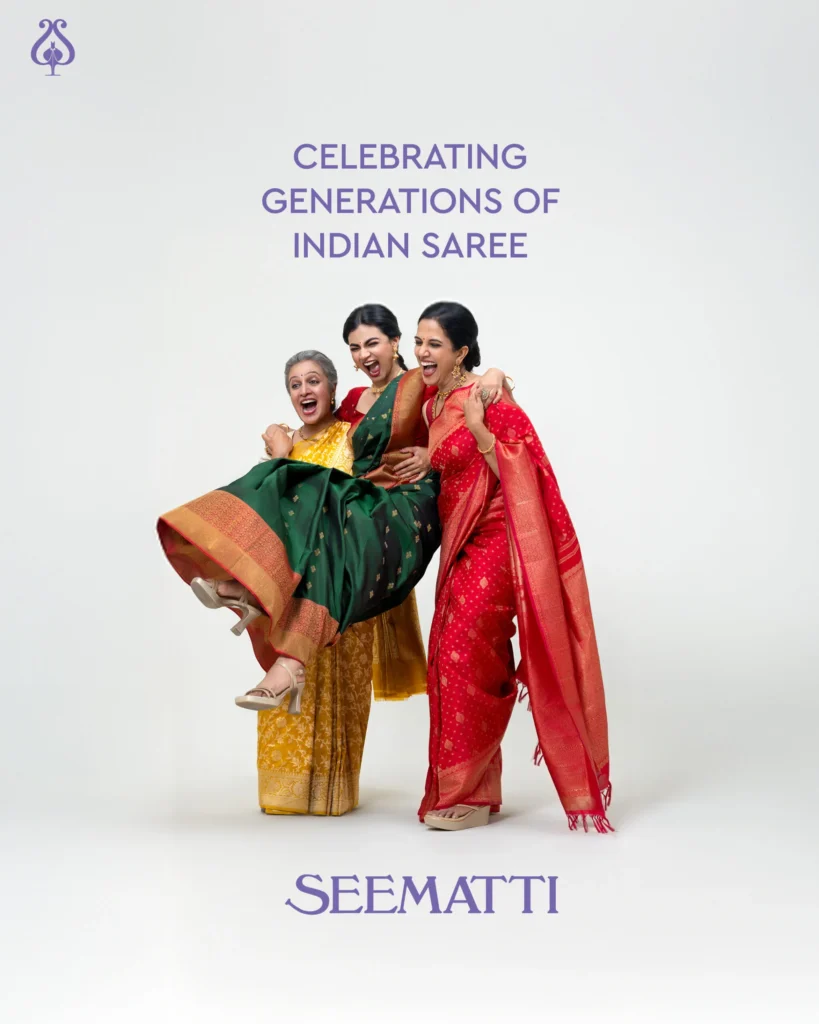
For Seematti’s campaign “Celebrating Generations of Indian Saree”, with creative direction by BBP India, the idea was women across generations wearing the saree in their own rhythm. That one line decided the casting, the styling and how much we directed on set. If the message is unclear, every other decision becomes a guess.
Casting decides more than the set does
In a saree campaign the model is not a hanger. The way a woman carries the drape, walks, sits and laughs is what makes the fabric feel real. So I spend time on casting before I spend time on backdrops.
- Age range: if the brand sells to grandmothers, mothers and daughters, the frame should have all three, not just one 22 year old in every look.
- Comfort with the garment: someone who wears sarees regularly moves differently from someone who is draped for the first time.
- Group chemistry: festive and family stories usually need group frames, and group frames only work when the people in them are at ease with each other.
Plan the drape, not just the look
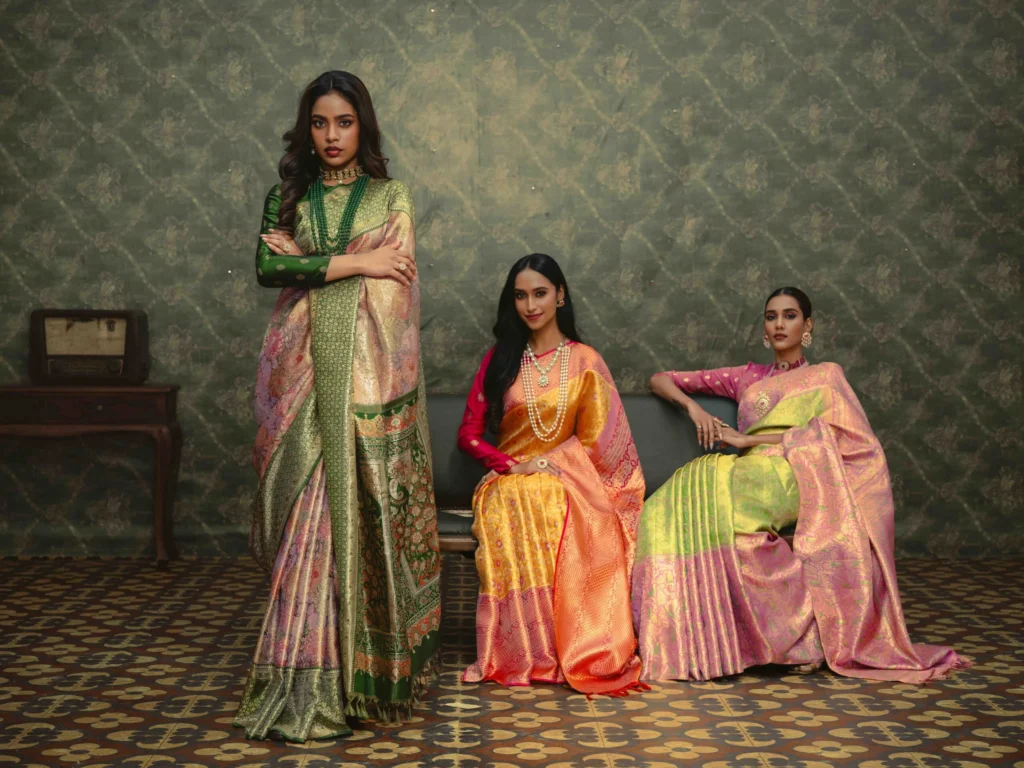
Every saree has a few things the customer is paying for: the border, the pallu, the body weave, the zari, the colour. A good shot list names which of these each frame must show. A wide group frame will sell the colour story. A three-quarter portrait sells the pallu. A tight detail sells the weave and the zari.
I ask the brand to mark the hero pieces in advance and to send a stylist or draper who knows the collection. Pleats, pins and the fall of the pallu are adjusted between almost every frame. That time has to be built into the schedule, or the day ends with beautiful light and badly fallen fabric.
Colour is a promise to the customer
With textiles, colour accuracy is not a technical nicety. A customer who buys a maroon silk after seeing it in a hoarding or on Instagram expects maroon when it arrives or when she sees it in the showroom. Mixed light, strong colour casts from walls and heavy grading can all shift a saree’s colour.
So I light for true colour first and build mood around it. In post, I compare the images against the actual fabric before anything is delivered. Mood can be added. Wrong colour cannot be explained away at the billing counter.
Studio, set or outdoor
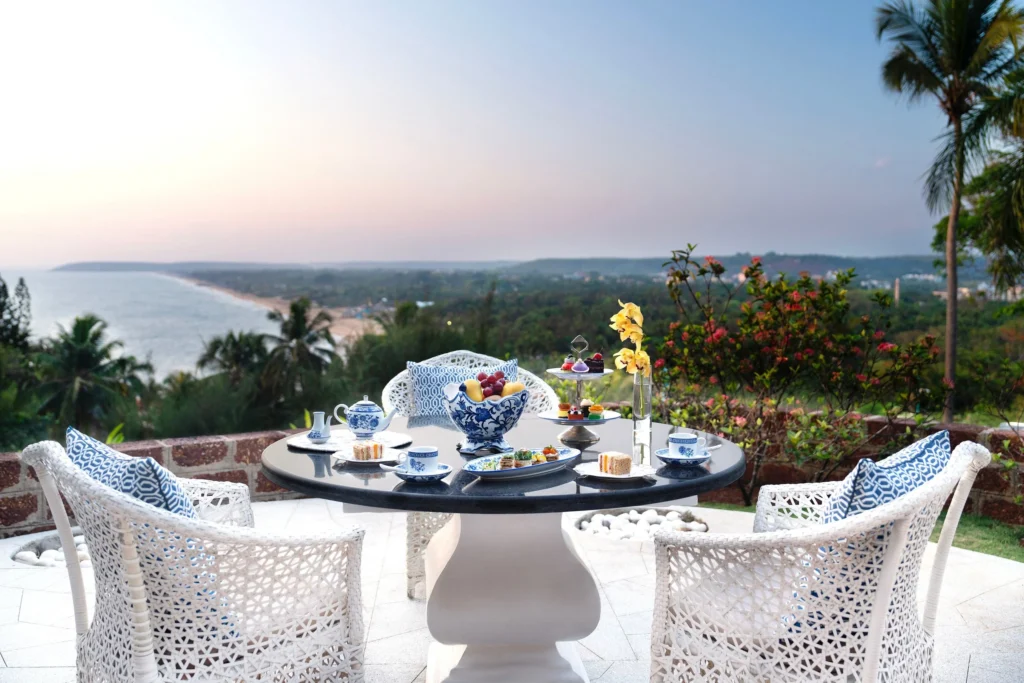
There is no single right answer. A clean studio keeps attention on the garment and gives you control over light, which suits catalogue work and campaigns where the styling itself is the idea. A built set, like a vintage living room or a painted backdrop, adds story without losing control. Outdoor locations such as a meadow or a forest give scale and freshness, but the weather, the sun and the time of day start making decisions for you.
For the Seematti generations campaign we worked in the studio over two packed days, and the energy came from the people rather than the location. For some couture work, open meadows and forest settings made more sense because the brand wanted the garment to feel part of a larger world.
Let people move
The most common problem I see in saree advertising is stiffness. Perfect drape, perfect pose, and no life. Sarees are worn while walking, dancing, sitting with family and laughing at something someone said. Some of the strongest frames I have made came from guiding the mood and then stepping back.
On set this means music, short breaks, letting the group talk, and shooting continuously through moments that are not “the pose”. It also means the draper and I agree on when to stop and fix the fabric and when to let a slightly imperfect fall stay because the expression is right.
Think about where the images will run
Textile campaigns in India usually run across hoardings, showroom displays, print, newspaper ads during festive seasons, and social media. Each needs a different shape. A hoarding needs room for the logo and a line. A showroom panel may be tall and narrow. Instagram wants a vertical frame where the face and the pallu both fit.
I plan key frames so they can be cropped for these formats, with space on the sides or above where the agency may place type. It is much easier to plan this on set than to stretch a frame later.
A short checklist for textile brands
- One clear line for what the campaign should feel like
- Hero pieces marked, with the details each must show
- Casting that matches who actually buys from you
- A draper or stylist who knows the collection
- Time in the schedule for fabric adjustments
- A plan for colour checks against the real fabric
- A list of formats the images must fit, with usage period
Final thought
A saree campaign works when the customer can imagine herself, her mother or her daughter in that drape. The fabric has to be honest and the people have to feel real. Everything else, from the set to the light, is there to support that.
If you are planning an ethnic wear or saree campaign, you can see how I approach advertising photography, read the full Seematti generations campaign, or get in touch to talk about your collection.