Most factories commission photography for the same reason. A buyer, investor or partner who has never visited the plant needs to trust it. The photographs stand in for the site visit.
That is a different job from making a factory look dramatic. The images have to be accurate, clear about scale and process, and safe to use in front of the people who will check the details. I work as an industrial photographer across India, and this is how I plan a factory shoot so that it produces a usable library without disrupting the plant.
Start with who will see the images
Before anything else, I ask where the images are going. For Perfetto Naturals, an organic food producer in Wayanad, the answer was their B2B customers in India and abroad, from FMCG companies to food and beverage brands. The images were going into their website, B2B sales decks and international communication.
That changes what you shoot. A sales deck for an FMCG buyer needs clean process images that show hygiene, capacity and control. A careers page needs people. An investor presentation needs scale. If you know the audience first, the shot list writes itself.

Build the shot list around the process, not the building
A plant is easiest to understand in the order the product moves through it. For Perfetto Naturals, the brief covered coffee roasting, pepper cleaning, ginger washing, frozen storage and their Supercritical Fluid Extraction (SCFE) system. I planned the days in that logic, and the final library was organised into four groups:
- Facilities: exterior and interior views of the buildings and units
- Processes: roasting, washing, cleaning, grading and extraction
- Technology: the SCFE system, cold storage and mechanised units
- People: workers, farmers and technicians
That structure matters later. A sales team can find “processes” or “technology” in a folder in seconds. An unsorted set of 400 files gets used once and forgotten.
Plan for the light you will actually get
Light inside industrial plants is rarely kind. Fluorescent tubes, deep shadows, and stainless steel that reflects everything are normal. On the Perfetto shoot, the first day went into walking the facility and studying how light behaved in each area: where natural light could be used and where I would need to add and control my own.
For a factory manager, the practical point is this: a light study day is not wasted time. It is what lets the shooting days run without surprises, and it is usually cheaper than reshooting a unit that came out flat or green.
Work around production, not against it
A working plant cannot stop for a photographer. On the Perfetto shoot I worked around the actual production schedules so that operations were not interrupted. That requires the plant team to share the schedule in advance: when each line is running, when it is being cleaned, when shifts change, and which areas can be accessed at which times.
If you are planning a shoot, send the photographer:
- the production schedule for the shoot days
- a list of areas that are restricted or need escorts
- the name of one person on site who can make decisions quickly
- any equipment or processes that cannot be shown for confidentiality reasons
Safety is part of the brief
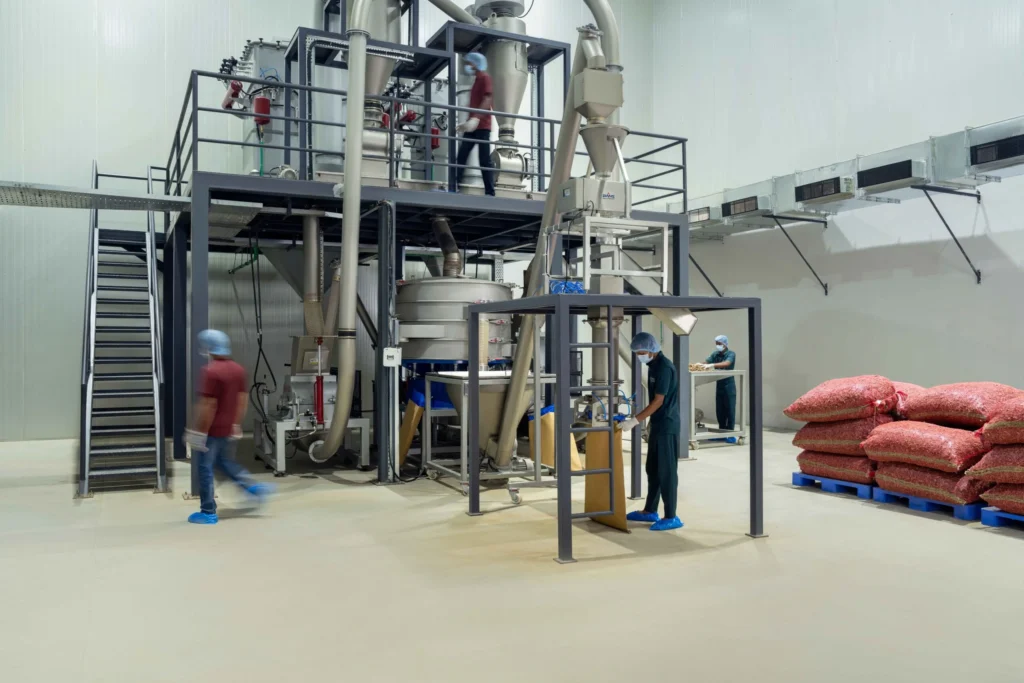
Helmets, protective gear and safe working distances are not optional, and they should appear in the images too. A buyer looking at a process photo will notice a worker without gloves or a hairnet. On the Perfetto shoot, safety protocols were followed at every step: helmets, protective gear and working distances.
Show scale and detail together
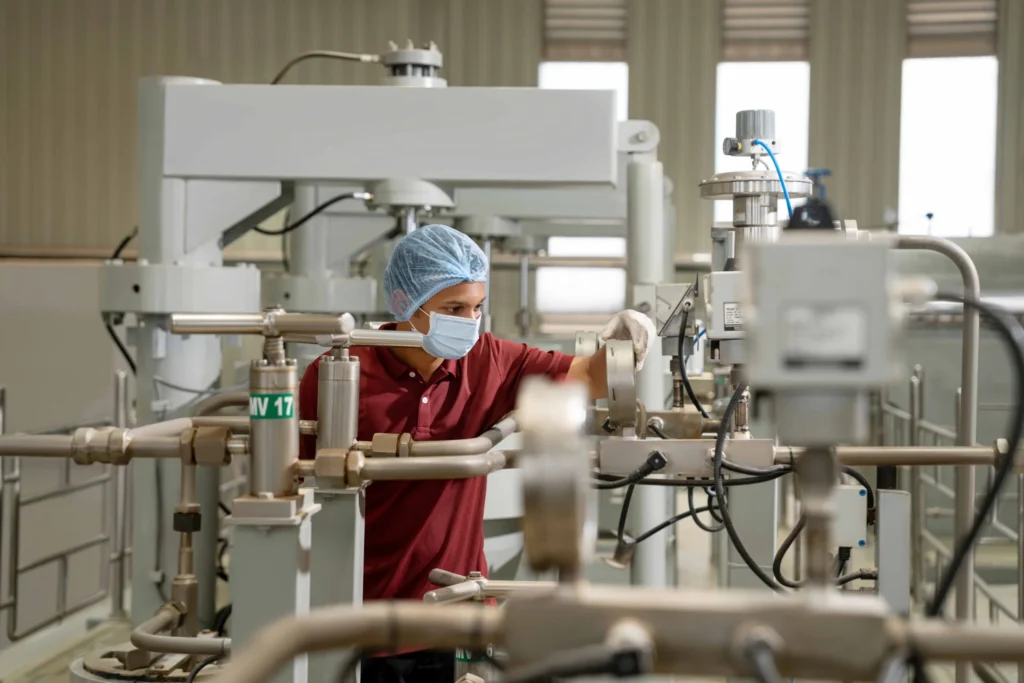
The best industrial libraries switch between wide and close. Wide frames show the size and order of the plant. Close frames show precision, such as coffee beans being roasted or ginger moving through a mechanised washing unit. At Perfetto I worked on both macro detail and wide industrial views, because a buyer needs to see that the operation is large and that it is controlled.
Keep people in the frame
Machines alone make a plant look empty. Including the people who run the plant tells a buyer that the operation has trained, careful staff. At Perfetto, the “people” category included workers, farmers and technicians, because the company’s story is about the farmers who supply it as much as the technology that processes the crop. Arrange consent from anyone who will be clearly recognisable before the shoot day.
How long does an industrial shoot take?
It depends on the number of units and processes, not the size of the building. Perfetto Naturals took three full days: one for orientation and light study, one for process documentation, and one focused on the SCFE technology. A single-line plant may need much less. A multi-site group will need more. A photographer who quotes without asking how many processes you need covered is guessing.
Next steps
My industrial photography page covers factory, plant and workplace photography across India, and the Perfetto Naturals case study shows the full project.
If you are planning a factory or plant shoot, you can reach me at mail@naseefgafoor.com or +91 99955 50062, or through the contact page.