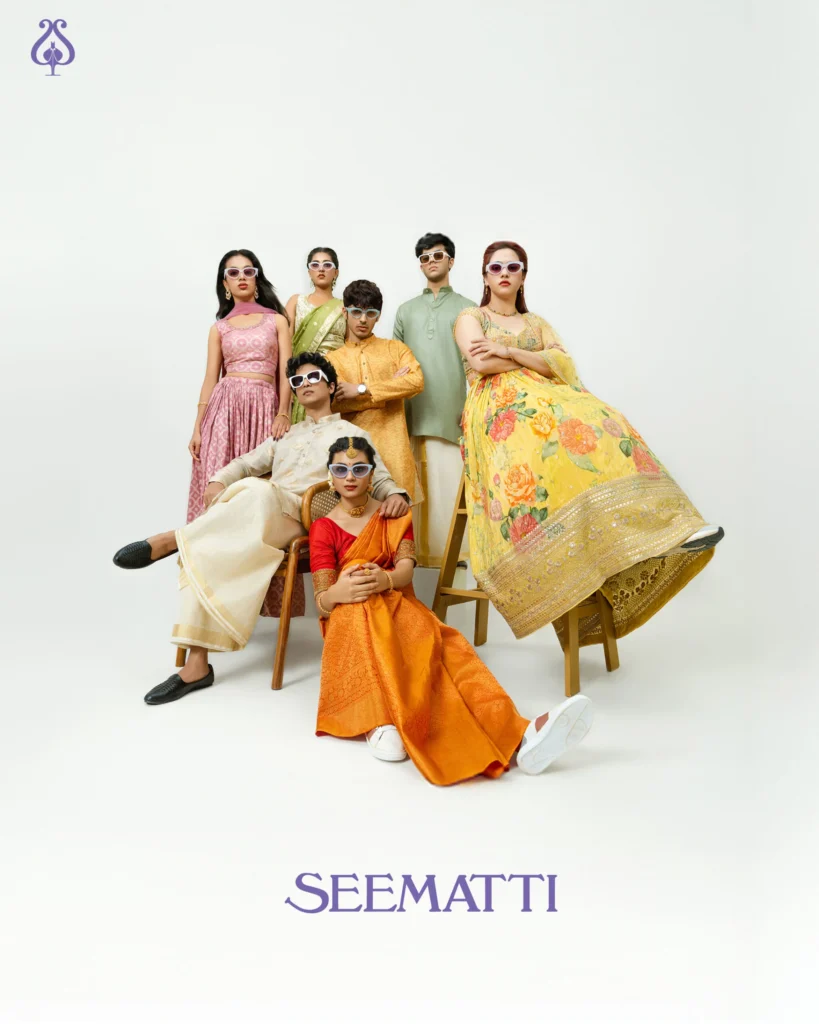
One of the first questions I ask on any advertising brief is a simple one: should we build this, or go and find it? A studio set gives you control. A real location gives you scale and texture you cannot fake. Both cost money and time in different ways, and the wrong choice can quietly make a shoot harder than it needs to be.
This is how I decide between a studio, a built set and a real location for brands across India, from jewellery and skincare to fashion and food.
What the product needs to look its best
I start with the product, not the mood board. Some products need precise, repeatable light. Jewellery, skincare packaging, glass and metal all reflect everything around them, and small changes in light change how premium they look. These are almost always easier in a studio, where nothing moves unless you move it.
Fabric, people and spaces are different. A saree, a family moment or a lifestyle story often gains something from real air, real distance and real light. That does not mean they must go outdoors, but the option is worth considering.

When a built set is the better answer
Sometimes the idea is nature or a place, but the product still needs studio control. That is where a built set earns its cost.
For Tanmayi Jewellery we built a forest inside our studio in Kochi over two days, with fresh plants, moss, vines and a handcrafted waterfall. The Turkish Collection sat among wooden textures and soft greens, and the Diamond Collection was shot with black stones, mist and reflections. A real forest would have given us the setting but not the control over tiny reflections and mist density that fine jewellery needs. You can read the full Tanmayi campaign story.
A built set makes sense when:
- The product is small, reflective or detailed and needs controlled light
- The idea calls for a setting that is hard to access, or does not exist
- You need the same look repeated across many products or collections
- The schedule cannot depend on weather
When a clean studio is enough
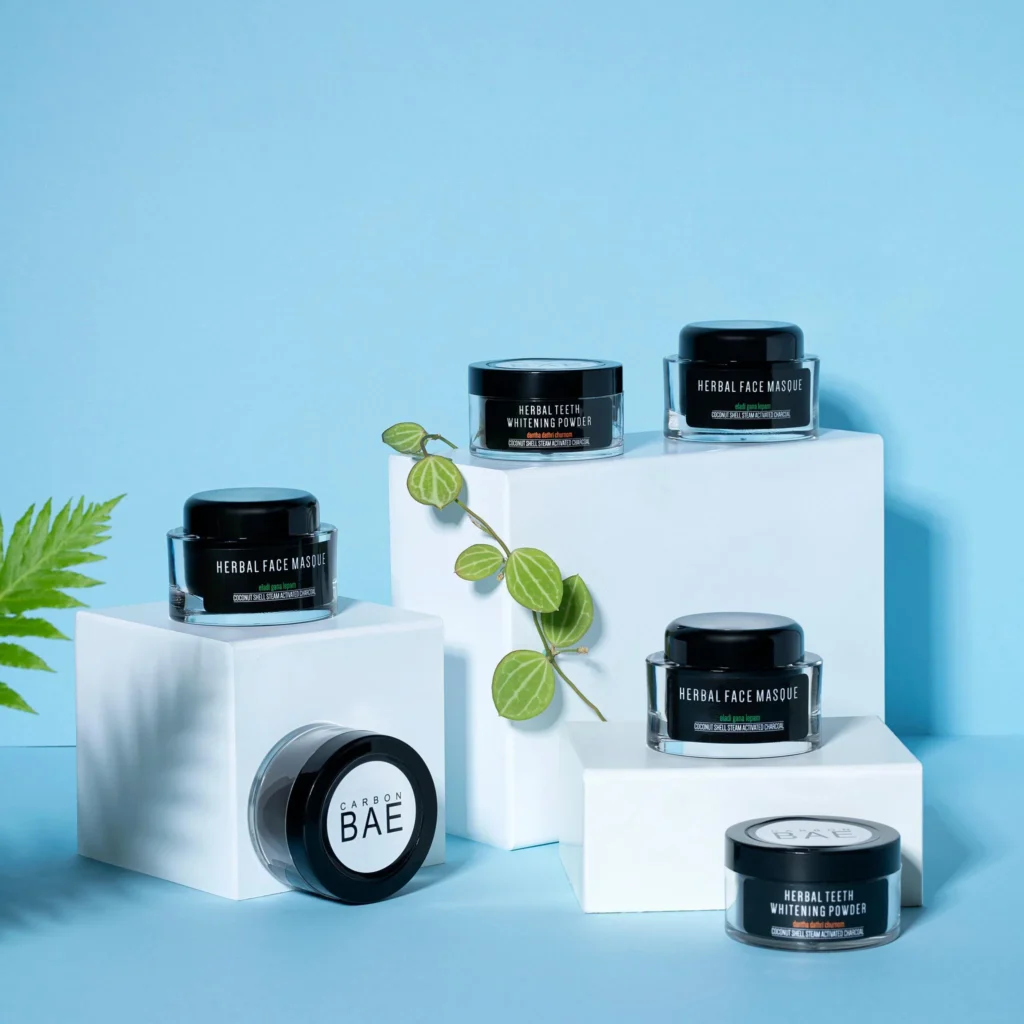
Not every idea needs a set. For Carbon BAE, a skincare brand built around activated charcoal and natural ingredients, we shot on clean pastel backgrounds with hard light and a few leaves as natural cues. The simplicity was the idea. A studio let us shape sharp shadows and crisp edges, and the images worked for ecommerce, social ads and banners. More on that in the Carbon BAE skincare shoot.
A plain studio is usually the right call for ecommerce, catalogue work and campaigns where the product and its form are the message.
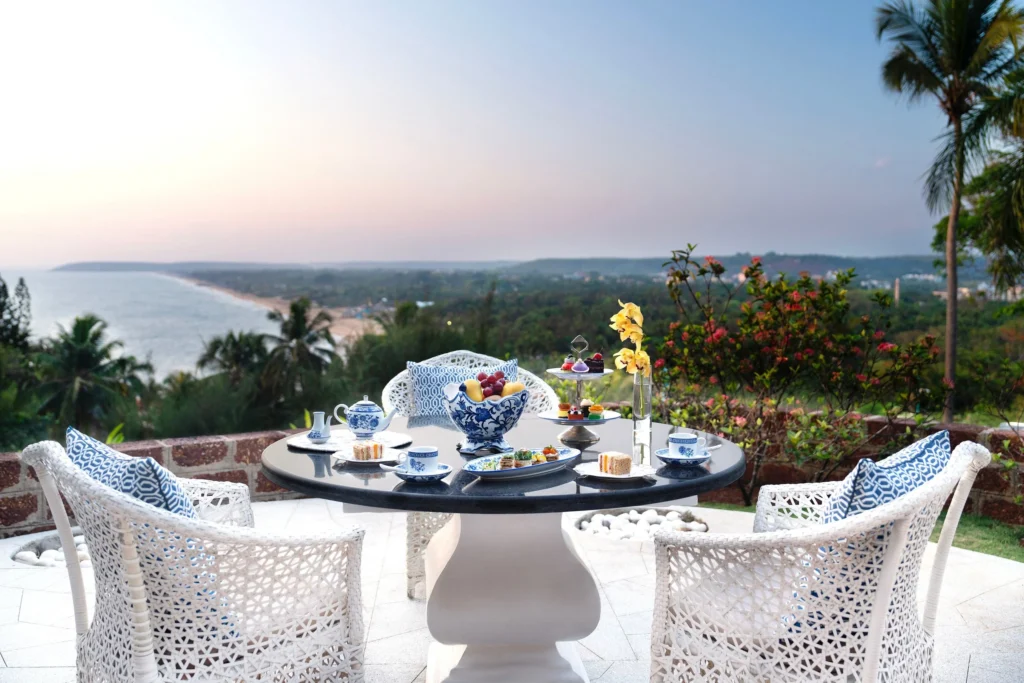
When a real location is worth it
Locations bring things a studio struggles with: depth, real horizons, architecture, weather, the feeling of a place. For couture and ethnic wear, an open meadow or a forest can make a garment feel part of a larger world. For hotels and resorts, the location is the product, so there is no choice to make.
The trade off is control. In India, a location shoot means planning around the sun, monsoon and heat, permissions, travel for crew and talent, power for lights, changing rooms, and the public. A golden hour lasts a short time and does not wait for a delayed outfit change.
The questions I ask before deciding
- What exactly must the customer see in the product, and how much light control does that need?
- Is the setting part of the message, or just a backdrop?
- How many products or looks do we need in the day?
- Will the images be reused across seasons, and must they match?
- What does the season and weather look like on the planned dates?
- What are the real costs of each option, including travel, permissions, set build and backup days?
Cost and schedule, honestly
People often assume a studio is cheaper. A plain studio usually is. A built set is not always: plants, props, water, set carpentry and the days to build and strike it add up. A location can look cheap until you add travel, permits, a weather backup day and the slower pace of moving light and crew outdoors.
I find it more useful to compare what each option gets you per usable final image, rather than per day. A studio day with a fast product list can deliver a lot. A location day may deliver fewer frames, but frames that nothing else could give you.
One more factor is time with talent. A model or a family on location tires faster in heat and travel, and that shows in the face by afternoon. In a studio, breaks are easy, make-up stays fresh longer and changes are quicker. When a campaign depends on people looking relaxed and natural for many looks in a day, that alone can tip the decision towards the studio, even when the idea feels outdoors.
Mixing both
Many campaigns are best split. Hero lifestyle frames on location, product and detail frames in the studio, with lighting and colour matched so the two sets feel like one campaign. This needs planning at the shot list stage, so that the studio light imitates the direction and warmth of the location light.
Final thought
Studio or location is not a question of taste. It is a question of what the product needs, what the idea needs, and what the schedule and budget can carry. Get that right and the shoot day becomes calmer for everyone.
If you are planning a campaign and are not sure which way to go, take a look at my advertising work or write to me with your brief.